SodaSlim Official Website › Articles › The Retraction That Stayed Famous
The Green Coffee Study That Was Retracted, And Stayed Famous
One small crossover trial made green coffee bean extract a household name in 2012. Its journal retracted it in 2014. The ingredient is still on shelves, including this one, and what survives the retraction is a smaller and more interesting story than the one that made it famous.
- The 2012 crossover study of 16 adults was retracted by its journal in 2014.
- The citation stays on this website with the flag attached, because dropping it would hand the 2012 version of the story the last word by default.
- Green coffee bean extract is not the same thing as coffee: roasting destroys the compound the extract is sold for.
- The surviving evidence is about glucose handling rather than dramatic weight loss.
- The pooled work covers preparations delivering at least 500 mg of chlorogenic acid a day, which is a large amount to fit into a capsule holding five ingredients.
What actually happened
In 2012 a journal published a crossover study in which sixteen overweight adults took a green coffee extract at two doses and a placebo across twenty-two weeks. The reported result was striking: an average of 8.04 kg lost, a body mass index drop of 2.92, and six of the sixteen shifting from pre-obesity into the normal range.
That result travelled. It was presented on television, it was quoted in marketing across the whole supplement shelf, and green coffee bean extract went from an obscure ingredient to one of the best-known names in the category inside a year.
In 2014 the journal retracted the paper. The record on PubMed still returns the original study, flagged with the publication type ‘Retracted Publication’, with the retraction notice from the same journal attached to it.
| What happened | When | What it meant |
|---|---|---|
| A crossover study of 16 overweight adults is published | 2012 | Reported 8.04 kg lost across a 22-week crossover on 700 mg and 1,050 mg of extract |
| The study becomes the basis of a television segment | 2012 | Green coffee bean extract enters the mainstream as a weight-loss ingredient |
| The journal retracts the paper | 2014 | A retraction notice is published in the same journal, two years after the original |
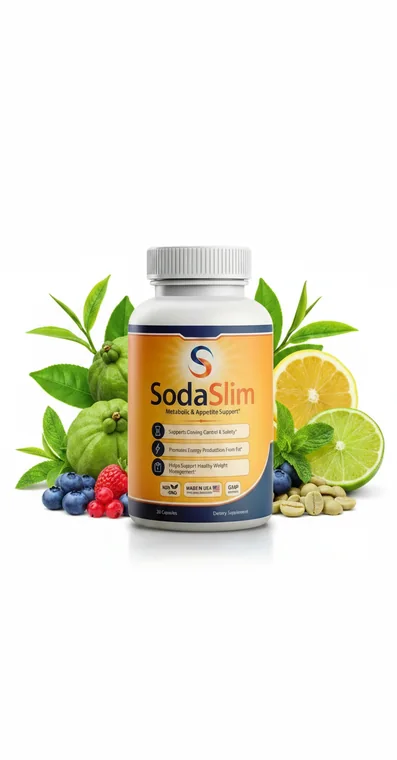
| The ingredient remains on shelves | Now | Including on this bottle, where it is one of five named botanicals |
The sequence is public record. PubMed still returns the original, flagged as a retracted publication, with the retraction notice attached to the record.
Why this website cites a retracted paper on purpose
There is an obvious argument for silence. A retracted study is not evidence, this desk sells a product containing the ingredient, and quietly omitting an inconvenient chapter would be the easy thing to do.
The argument against it is stronger. Most readers who have heard of green coffee bean extract have heard the 2012 version of the story, because that version reached daytime television and the retraction did not. A page that simply does not mention it leaves the reader believing what they already believed, which is the outcome silence produces rather than avoids.
So it is cited, and labelled, in the reference list at the foot of this article and on the ingredients page. A reader can open the record and see the flag for themselves, which is a more useful thing than being told what to think about it.
A retraction removes a paper from the evidence base. It is not automatically a finding of misconduct, and it says nothing about whether the ingredient does anything — only that this particular study can no longer be used to argue that it does. The rest of the literature stands or falls on its own.
What survives the retraction
A quieter and more coherent body of work, most of it about glucose rather than about scales.
| Study | What it gave | What it found |
|---|---|---|
| An eight-week randomised trial | 400 mg of extract twice a day | Examined anthropometry, glycaemic control, blood pressure, lipids and appetite in metabolic syndrome |
| A trial of enriched instant coffee | Chlorogenic-acid-enriched coffee | 6.9 per cent less glucose absorbed than control in healthy volunteers |
| An acute crossover study | Chlorogenic acid and caffeine | Modified gut hormone secretion and glucose tolerance |
| The 2023 meta-analysis | Preparations delivering at least 500 mg of chlorogenic acid a day | Pooled randomised trials of body weight |
| A meta-analysis of cardiovascular risk factors | Varied | Examined the wider metabolic marker picture |
Five studies that are not the retracted one. This is what the evidence for green coffee bean extract looks like when the famous study is set aside.
Read together, those five describe an ingredient with a plausible and measurable effect on how carbohydrate is handled, and a modest and inconsistent effect on body weight. That is a considerably less exciting claim than the one the retracted study produced, and it is the claim this website makes.
The number that matters for a buyer is in the fourth row. The 2023 meta-analysis covers preparations delivering at least 500 mg of chlorogenic acid a day. Half a gram is a substantial quantity to fit into a capsule that also has to hold four other botanicals, and that arithmetic is exactly what a label with no amounts prevents a reader from doing.
See the five SodaSlim botanicals in full
Each one with the published trial that measures it and the amount that trial actually used, on a page that prints what the label does not.
Three bottles $207 · sixty-day window · 60 days to change your mind
Choose A SodaSlim PackThirty capsules, thirty mornings · lot SOD-26/SO-3198 · ships from the U.S.
Why it is not just coffee
This is the part most summaries get wrong, and it is the most genuinely interesting fact about the ingredient.
Chlorogenic acid is present in the coffee bean before roasting and is substantially destroyed by the roast. A cup of ordinary coffee therefore delivers caffeine and very little chlorogenic acid; a green coffee extract delivers chlorogenic acid and some caffeine. They come from the same plant and they are not the same product.
That is why the enriched-coffee trial compared chlorogenic-acid-enriched instant coffee against normal instant coffee rather than against nothing, and found an effect in the enriched arm and not in the plain or decaffeinated ones. The comparison was designed around exactly this distinction.
- Roasted coffee: caffeine, very little chlorogenic acid.
- Green coffee extract: chlorogenic acid, standardised, plus caffeine.
- Decaffeinated coffee: neither, in useful quantity.
- This is one of the few supplement ingredients that genuinely cannot be obtained from the food version.
What all of that means for this bottle
Green coffee bean extract is the second name on the SodaSlim front panel. It is there for a defensible reason: the ingredient has a coherent mechanism and a real, if modest, human literature behind it once the retracted study is set aside.
What cannot be established from the outside is whether this capsule contains enough of it to resemble anything that has been tested. The artwork supplied with this product is a front panel with no Supplement Facts box, so there is no standardisation percentage and no weight. A green coffee extract standardised to 50 per cent chlorogenic acid and one standardised to 5 per cent are both accurately described as green coffee bean extract.
That is the argument the label-reading guide makes at length, and this ingredient is its clearest illustration. The story of the retraction is a story about evidence; the missing standardisation is a story about disclosure, and the second one is the more practical problem.
How to read any supplement study you are shown
The green coffee episode is a useful teacher because every failure mode in it is visible with hindsight. Four questions would have raised a flag at the time, and they work on any study a supplement page waves at you.
- How many people were in it? Sixteen is a small number for a weight-loss result of eight kilograms, and small trials produce large effects far more often than large trials do.
- Who ran it and who paid? A question worth asking without cynicism. The answer is usually in the paper and is usually unremarkable, and the times it is not are the times it matters.
- Has it been replicated? A single striking result is a hypothesis. The pooled work that came later is what tells you whether the hypothesis survived, and for this ingredient the pooled work describes something much more modest.
- Does the record carry a flag? PubMed marks retracted publications explicitly and attaches the notice. It takes ten seconds to look and almost nobody does.
The fourth is the one this article exists for. A reader who opens the record itself sees the flag immediately, which is a better outcome than being told about it by a website that sells the ingredient.
SodaSlim is a dietary supplement, not a drug, and it is not FDA-approved. Its statements have not been evaluated by the Food and Drug Administration and it is not intended to diagnose, treat, cure or prevent any disease. Anyone taking prescription medicine, and anyone in the four groups the label's own caution names, should speak to a clinician before the first capsule.
References
- Vinson JA, Burnham BR, Nagendran MV. Randomized, double-blind, placebo-controlled, linear dose, crossover study to evaluate the efficacy and safety of a green coffee bean extract in overweight subjects. Diabetes Metab Syndr Obes. 2012;5:21-27. RETRACTED — retraction notice Diabetes Metab Syndr Obes. 2014;7:467. PMID 22291473. https://pubmed.ncbi.nlm.nih.gov/22291473/
- Kanchanasurakit S, Saokaew S, Phisalprapa P, Duangjai A. Chlorogenic acid in green bean coffee on body weight: a systematic review and meta-analysis of randomized controlled trials. Syst Rev. 2023;12(1):163. PMID 37710316. https://pubmed.ncbi.nlm.nih.gov/37710316/
- Roshan H, Nikpayam O, Sedaghat M, Sohrab G. Effects of green coffee extract supplementation on anthropometric indices, glycaemic control, blood pressure, lipid profile, insulin resistance and appetite in patients with the metabolic syndrome: a randomised clinical trial. Br J Nutr. 2018;119(3):250-258. PMID 29307310. https://pubmed.ncbi.nlm.nih.gov/29307310/
- Thom E. The effect of chlorogenic acid enriched coffee on glucose absorption in healthy volunteers and its effect on body mass when used long-term in overweight and obese people. J Int Med Res. 2007;35(6):900-908. PMID 18035001. https://pubmed.ncbi.nlm.nih.gov/18035001/
- Johnston KL, Clifford MN, Morgan LM. Coffee acutely modifies gastrointestinal hormone secretion and glucose tolerance in humans: glycemic effects of chlorogenic acid and caffeine. Am J Clin Nutr. 2003;78(4):728-733. PMID 14522730. https://pubmed.ncbi.nlm.nih.gov/14522730/
- Pourmasoumi M, Hadi A, Marx W, et al. The effect of green coffee bean extract on cardiovascular risk factors: a systematic review and meta-analysis. Adv Exp Med Biol. 2021;1328:323-345. PMID 34981487. https://pubmed.ncbi.nlm.nih.gov/34981487/