SodaSlim Official Website › Choosing a metabolism supplement
Choosing a metabolism supplementChoosing a Metabolism Supplement: How to Read a Label
Four things decide whether a metabolism supplement can be checked at all: a serving weight, an amount beside every ingredient, a standardisation percentage on each extract, and a stated caffeine total. A panel carrying all four can be compared with the research. A panel carrying none of them can only be trusted or refused.
A reading method rather than a ranking, because a ranking written by a retailer is not information.
The four lines that make a panel checkable
A serving weight
How many milligrams of material are in one capsule or one scoop. This is the ceiling for everything else on the panel, and without it no arithmetic is possible at all. A formula claiming five ingredients at trial-sized amounts has to fit them somewhere.
An amount beside every named ingredient
Not a blend total. A proprietary blend of 500 mg containing five ingredients could be 496 mg of the cheapest and 1 mg of each of the others, and there is no way to tell from outside. A per-ingredient figure is what makes a comparison with a trial possible.
A standardisation percentage on each extract
An extract is a weight of plant material, and the active fraction varies. Green tea standardised to 50 per cent EGCG and green tea standardised to 5 per cent are both green tea extract; only one of them is comparable with the trials.
A caffeine total
Caffeine arrives from several ingredients at once — the anhydrous powder, green tea, green coffee, guarana. A per-ingredient figure requires the reader to add them up, and most readers will not. One stated total against the 400 mg a day reference point is what a person actually needs.
What a proprietary blend actually hides
A proprietary blend gives one weight for a group of ingredients listed in descending order. The legal justification is that the recipe is commercially valuable; the practical consequence is that the reader cannot check anything.
Take a 500 mg blend of five plants where the research amounts for three of them are 500 mg, 1,500 mg and 270 mg a day. Those three alone cannot fit inside the blend even if the other two were absent. That arithmetic is available to anybody who knows both numbers, and a blend total is what makes it possible at all.
A label with no amounts whatsoever — not even a blend total — removes even that. It is less informative than a proprietary blend rather than more, and it is commoner on this shelf than most buyers realise. This is the case SodaSlim presents, and it is set out at length on the ingredients page.
| What the panel gives you | What you can check |
|---|---|
| Per-ingredient amounts and standardisation | Everything. Compare directly with the trial. |
| A blend total only | Whether the trial amounts could fit at all. Often they cannot. |
| No amounts at all | Nothing from the label. Only the research amounts, as a sense of scale. |
| No panel at all | Nothing, including whether the capsule shell is vegetarian. |
Roughly half of the metabolism shelf prints a full panel. The other half sits somewhere in the lower three rows.
Five questions worth asking before any metabolism purchase
- How much caffeine am I already having? Write the real figure down. Two mugs of filter coffee is roughly 190 mg and a large takeaway cup can be 300 on its own. This is the single most consequential number in the decision.
- Does the label name a specific caution? A manufacturer naming pregnancy, stimulant sensitivity and high blood pressure has told you something specific about its formula. A label with no caution at all is not reassuring; it is quiet.
- How long is the refund window, and when does it start? Thirty days from purchase on a product with a six-week timescale is a window that cannot be used. Sixty days from purchase can be.
- Can I telephone anybody? A published number, a named business and a return address are worth more at the moment of a problem than any badge on the bottle.
- What would change my mind in eight weeks? Pick the measure before you buy. A reader who cannot name one will not be able to tell whether anything worked.
Four of those five can be answered from a website before a purchase. The first can only be answered honestly, which is why it is first.
What the badges on the bottle are worth
Marks on a supplement do three different jobs and are usually read as though they did one. Sorting them takes ten seconds and changes what a bottle looks like.
| Type of mark | Examples | What it tells you |
|---|---|---|
| Process | GMP certified, FDA-registered facility | How the factory runs and what it has filed. Real, and about the plant rather than the product. |
| Composition | Non-GMO, gluten free, vegetarian | What is and is not in the formula, by category rather than by quantity. |
| Marketing | Natural formula, doctor developed, clinically inspired | Nothing checkable. No regulatory definition sits behind any of them. |
| Independent testing | A third-party certification programme | The only kind that speaks to what is actually in a capsule, and the rarest on this shelf. |
An FDA-registered facility mark is the one most often misread. Registration is a filing requirement for a manufacturing plant and carries no implication that the agency assessed the product.
The fourth row is the one worth hunting for, and its scarcity is the category's real problem rather than any individual manufacturer's. An audit of the FDA tainted supplements database is a good reminder of what independent testing is there to catch.
A worked example: reading the SodaSlim panel
Apply the four lines to the product this website sells and the result is quick and not flattering. There is no serving weight, because there is no panel. There are no per-ingredient amounts. There is no standardisation percentage on either extract. And there is no caffeine total, for a formula whose first named ingredient is caffeine anhydrous.
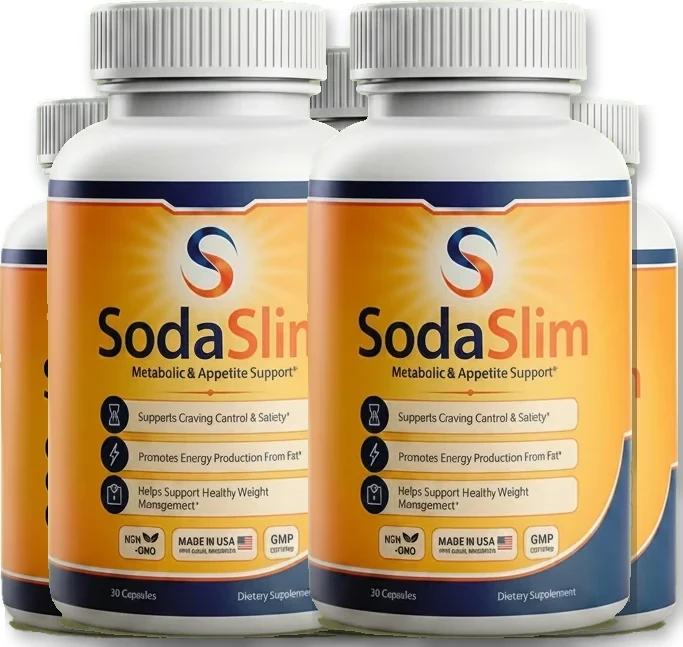
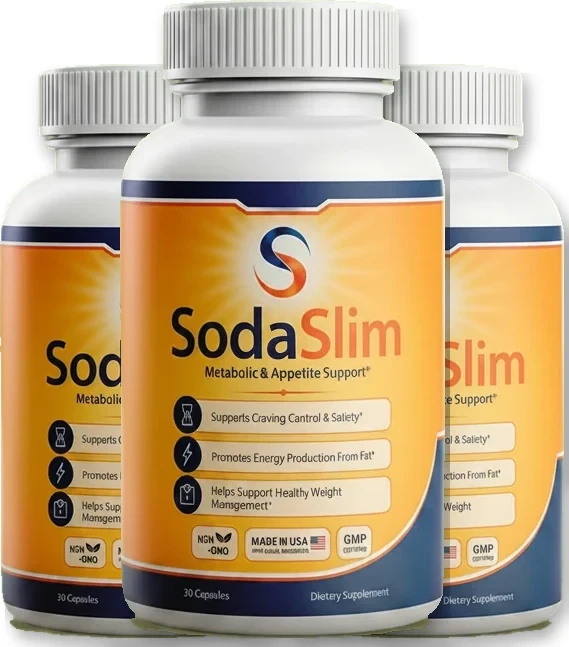
What there is: five ingredient names on the front panel, a capsule count, three marks and four claim statements. Every one of those can be verified against the artwork, and nothing else can be verified at all.
The honest conclusion is the one this desk publishes rather than avoids. For a reader whose answer to the third question in the previous section is that the missing amounts matter, this is not the right purchase, and no refund window changes that. For a reader whose answer is that they do not, the sixty-day window and the published lot number make the purchase a reasonable one to test.
That is what a reading method produces: a decision that belongs to the reader, arrived at from the label rather than from a sales page.
- Look for the serving weight first. No serving weight, no arithmetic.
- Then the per-ingredient amounts, then the standardisation.
- Then the caffeine total, against the 400 mg reference point.
- Then the refund window, and when it starts.
Sources for this buying guide
- Nawrot P, Jordan S, Eastwood J, et al. Effects of caffeine on human health. Food Addit Contam. 2003;20(1):1-30. PMID 12519715. https://pubmed.ncbi.nlm.nih.gov/12519715/
- Dulloo AG, Duret C, Rohrer D, et al. Efficacy of a green tea extract rich in catechin polyphenols and caffeine in increasing 24-h energy expenditure and fat oxidation in humans. Am J Clin Nutr. 1999;70(6):1040-1045. PMID 10584049. https://pubmed.ncbi.nlm.nih.gov/10584049/
- Kanchanasurakit S, Saokaew S, Phisalprapa P, Duangjai A. Chlorogenic acid in green bean coffee on body weight: a systematic review and meta-analysis of randomized controlled trials. Syst Rev. 2023;12(1):163. PMID 37710316. https://pubmed.ncbi.nlm.nih.gov/37710316/
- Heymsfield SB, Allison DB, Vasselli JR, et al. Garcinia cambogia (hydroxycitric acid) as a potential antiobesity agent: a randomized controlled trial. JAMA. 1998;280(18):1596-1600. PMID 9820262. https://pubmed.ncbi.nlm.nih.gov/9820262/
- White CM. Continued risk of dietary supplements adulterated with approved and unapproved drugs: assessment of the US Food and Drug Administration's tainted supplements database 2007 through 2021. J Clin Pharmacol. 2022;62(8):928-934. PMID 35285963. https://pubmed.ncbi.nlm.nih.gov/35285963/
- Using Dietary Supplements Wisely. National Center for Complementary and Integrative Health, National Institutes of Health. https://www.nccih.nih.gov/health/using-dietary-supplements-wisely
- Dietary Supplements: What You Need to Know. Office of Dietary Supplements, National Institutes of Health. https://ods.od.nih.gov/factsheets/WYNTK-Consumer/
- Questions and Answers on Dietary Supplements. U.S. Food and Drug Administration. https://www.fda.gov/food/information-consumers-using-dietary-supplements/questions-and-answers-dietary-supplements
Apply the method to SodaSlim
Five names, a capsule count and four claim lines, against sixty days from the purchase date to decide what that is worth.
Three bottles $207 · sixty-day window · 60 days to change your mind
Choose A SodaSlim PackThirty capsules, thirty mornings · lot SOD-26/SO-3198 · ships from the U.S.